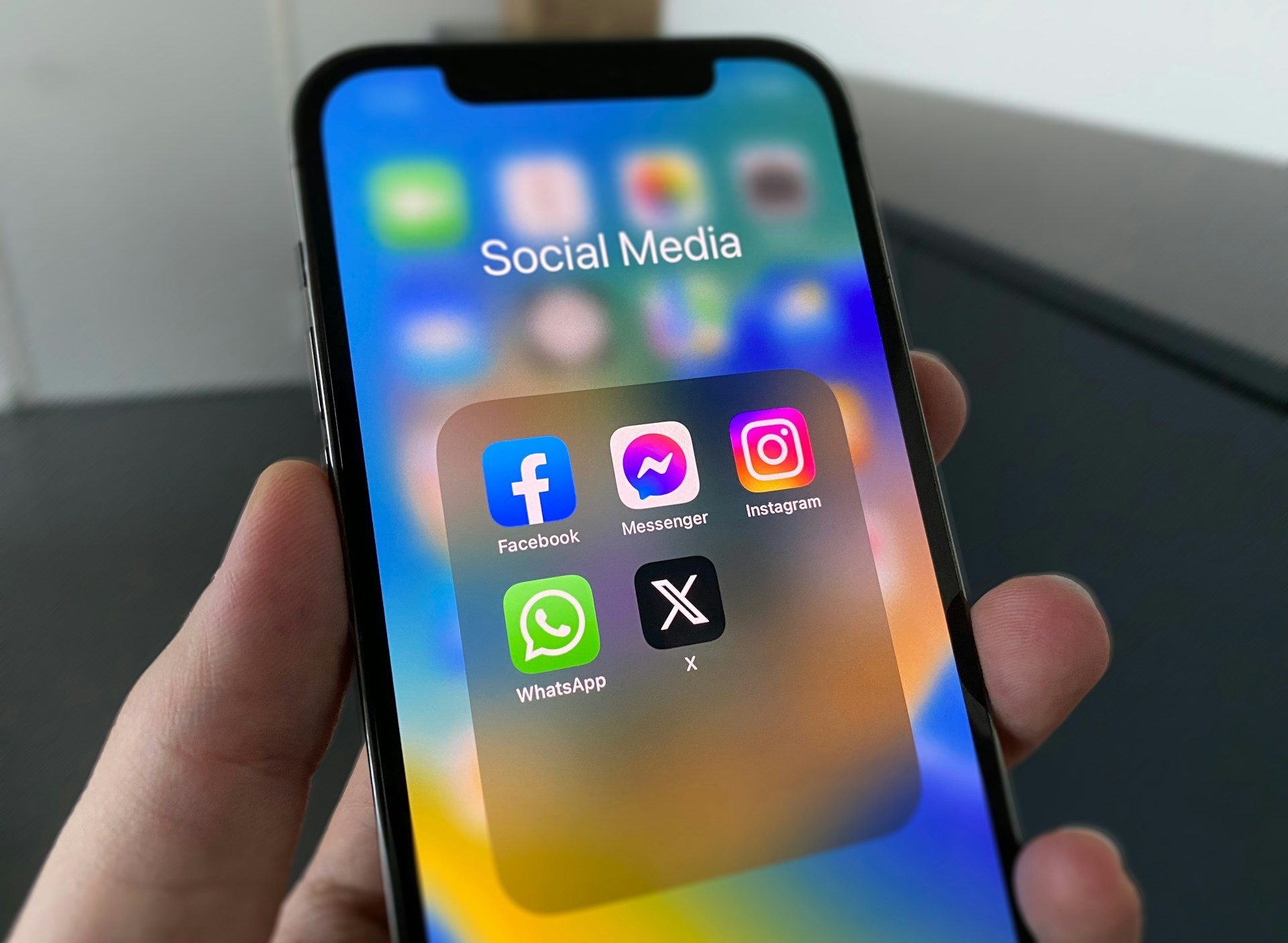
Many companies and businesses want to improve the SEO of their social media profiles or channels, primarily to capitalize on traffic from search engines like Google or Bing (which display certain social media posts in their search results). Below, I share some tips for improving the SEO of our social media posts:
Social media profile
The first element to optimize is your social media profile. To do this, upload a profile picture and fill in the profile description with useful information (in text format) about your business or company. Also, make sure the profile URL points to your official website or online store (this field carries significant weight for SEO).
It is important to avoid using link shorteners or multi-link services (such as Linktree or Bitly) in the URL field, as these services are designed primarily for individuals who do not own a website. If you choose to use a Linktree link instead of your own website’s URL, you are essentially “wasting” a valuable SEO link that could otherwise benefit your own site.
Keyword research
Before posting on social media, conduct preliminary keyword research. This allows you to select the most suitable titles (from an SEO perspective) and provides a “roadmap” for ranking for terms relevant to your audience or target market.
Filling in the post’s text field
When creating a social media post, fill in the text field, as the platform’s search function primarily scans this area; without text, the post becomes virtually invisible to the search tool. Whenever possible, try to use the opening line to include the keywords or phrases you want to rank for, while also describing the content of the post.
Some social platforms offer separate fields for a title and a description, while others use a single text field. Another important factor is that text embedded in an image is effectively invisible or useless for SEO and search engine ranking.
Avoid using emojis or special characters in text
Exercise caution when using emojis or special characters, as they can render certain phrases or keywords unreadable to search engines. For instance, a post titled “Tips for buying houses in Bogota” could have its keywords compromised by special characters—such as “🏠Tips for buying houses in Bogot@!!😮”—because the attached symbols interfere with the words “tips” (due to the house emoji) and “Bogota” (due to the smiley face, at-sign, and exclamation marks), making it difficult for search engines to process them correctly.
Image, video thumbnail, or video file names
Before uploading an image, video thumbnail, audio file, or video, ensure the file name is correct. For example, in a post about “buying houses in Bogotá,” it is better for the image or thumbnail file to be named tips-for-buying-houses-bogota.jpg rather than w00090122452.jpg or whatsapp-image-20260927-at-83405-PM.jpg; if the file name reflects the post or topic, the code is cleaner and easier for search engines to identify.

Image ALT text
As we saw in our previous article, alternative text—or the image ALT field—allows visually impaired individuals to understand what an image depicts. This feature is also useful when someone wants to “listen” to an article or post using screen-reading software (the ALT text describes the image).
Tags
Some social platforms (like YouTube) allow the use of tags, which are very helpful when a user types a synonym or a misspelled word. For instance, if the post is about “Tips for buying houses in Tacna,” relevant tags might include: buying apartments in Tacna, apartments in Tacna, takna, taqna, Takna houses, Taqna houses, houses in Takna, houses in Taqna, buy houses in Takna, buy houses in Taqna. It is important not to confuse tags (which are valid for SEO purposes) with hashtags (e.g., #womensclothing), which serve no SEO function.
Chapters
Some video and podcast platforms allow chapters using timestamps; these tools are useful because they let users navigate the content. For example, a YouTube video might include text in its description like the following:
0:00 Introduction
0:49 Regulations on home buying
01:33 Residential areas in Bogotá
02:22 Criteria for choosing a house in Bogotá
04:33 Financing
06:34 Final tips
Marking AI content
Another important tip is to declare whether the content was created using AI, as this helps search engines classify it. This standard has currently been adopted across various social platforms, such as YouTube, TikTok, and Instagram, among others. The most important aspect of this rule is “not lying”; if we create a video using AI but claim otherwise, our social channel will lose credibility regarding future posts and become less trustworthy in the eyes of search engines.
Personal experience with the topic
One instance that stands out in my memory involved a company looking to improve the SEO of its social media channels. When I reviewed these channels, I was surprised to discover that for two years, the company had been posting images, carousels, and videos on Instagram and Facebook without any accompanying text—a serious SEO error. This was a clear example of how a lack of knowledge about such a basic rule can waste two years of work.
What are your thoughts on this topic? Do you know any other tips for improving SEO for social media posts?
If you would like to learn more about SEO, I recommend my book 101 SEO Mistakes Made by Companies and Businesses; you can visit the following link for more information.
Image by Julian via Unsplash.com under a Creative Commons license.