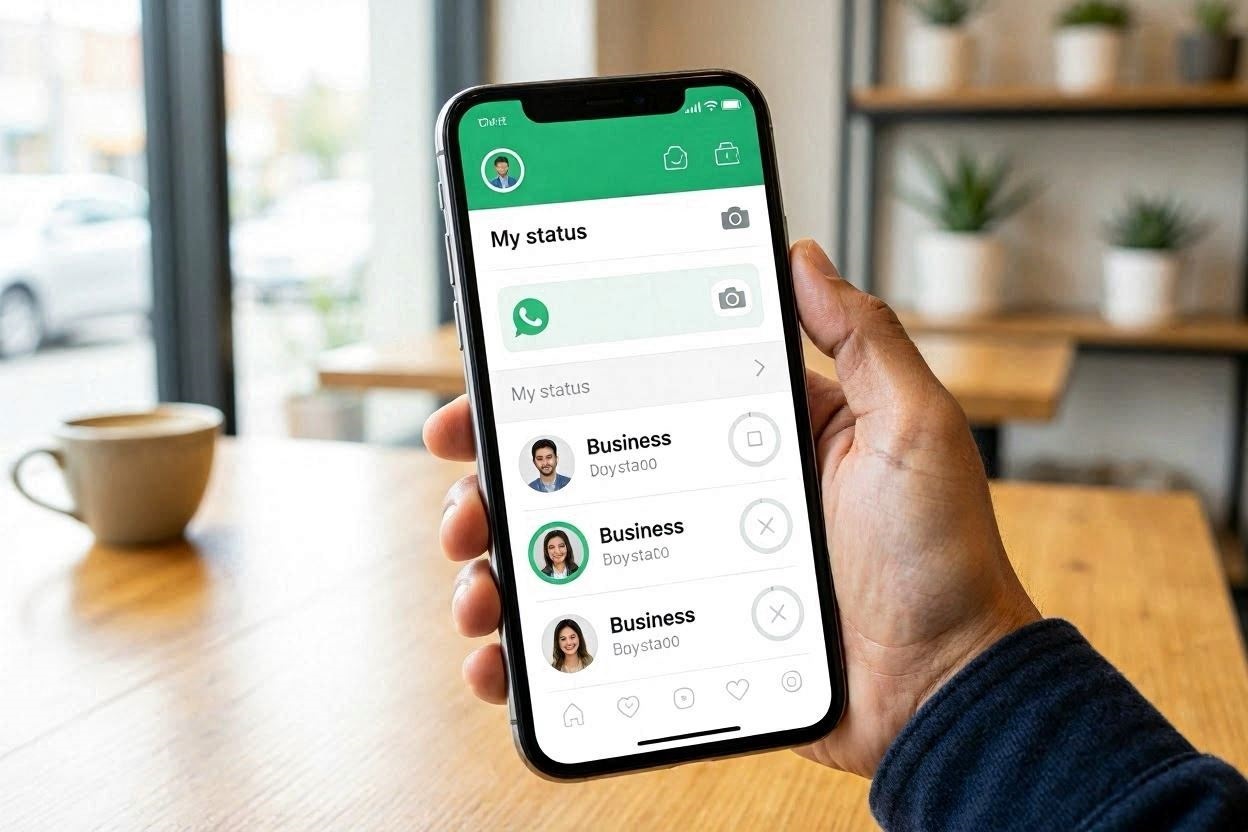
Many companies and businesses want to communicate with their contacts on WhatsApp Business, but they make the mistake of sending messages that result in penalties for violating WhatsApp’s spam rules. Below, I will explain the main benefits of using WhatsApp Business “statuses,” as well as share some personal/professional experiences on the subject:
What are WhatsApp Business Statuses?
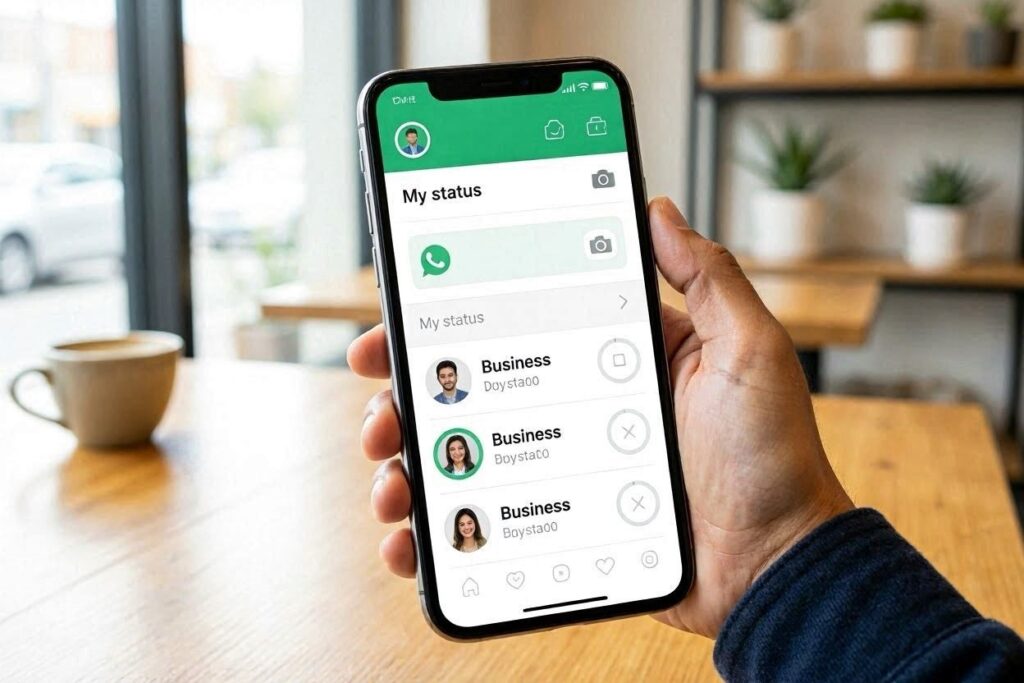
WhatsApp Business status updates work similarly to Instagram Stories, where content lasts 24 hours. However, this content isn’t entirely public; it can only be seen by your contacts (you must add the person as a contact, and they must add you back to see these posts). It’s important to note that the temporary posting format, now called “story” (which lasts only 24 hours), was actually invented by Snapchat, and Meta simply copied it.
A New Communication Channel
WhatsApp status updates are a new, organic communication channel found in the “News” or “Status” section of WhatsApp. Through this channel, you can see the different posts (statuses) from your contacts. It’s important to highlight that this channel is so significant that it’s the only place on WhatsApp where Meta Ads are displayed.
An effective way to keep our contacts informed about our activities
In addition to messaging with other people or groups, status updates allow people to stay informed about their contacts’ activities. If someone sees a status update that interests them, they can “reply” or “react” to the post, and that message or reaction will automatically be sent (privately) to the account that posted it. This is very useful for businesses and companies that want to remain visible to their contacts.
Reactivating lost conversations
The main advantage of this channel is that it enables businesses to reactivate lost conversations. For example, one of the main rules of WhatsApp Business is that we should only “respond” to the questions we are asked and cannot message the prospect again the next day or outside the specified time frame (if we haven’t received a response to our last message). Instead of sending untimely and unwanted messages that could be flagged as spam, the best way to revive lost conversations is to post relevant content in your status to restart them. When someone replies to a status update, you can continue the conversation privately.
Expires after 24 hours and is unlimited
Another advantage of WhatsApp status updates is that they disappear after 24 hours, which gives your content a sense of scarcity and lets people avoid deleting them. Another advantage is that the number of status updates you can post is unlimited, though the recommended limit is 1 or 2 per day.
Allows you to share images, text, videos, and links. The advantage of this format is that it allows you to share different types of content: images, text, videos, and links. Links are a great advantage, because unlike other channels that restrict links, status updates allow you to post links and direct people to other websites.
Unlimited reach
Another advantage of this channel is that you can reach an unlimited number of contacts, as long as you meet one fundamental rule: you must have those people added as contacts, and they must have you added as a contact.
Contacts can be excluded
Another advantage of this channel is that, if necessary, you can exclude some contacts from seeing your status updates. For example, if you have 100 contacts and want two specific contacts not to see a particular status update, you can exclude them from seeing that post.
Professional Experience on the Topic
I remember advising a business whose WhatsApp Business account had been closed for spam. Their employees told me that they initially sent private messages to all their WhatsApp contacts weekly, and that after receiving a penalty, they decided to use a CRM program to send messages, only to be penalized again. I explained that using a CRM doesn’t mean “ignoring the rules” or that the rules wouldn’t apply to them; they still had to comply. Then I asked them the following questions:
Why did you use that CRM?
Client: So we wouldn’t get penalized on WhatsApp for sending private messages to our contacts.
The CRM is just a tool; the rules still need to be followed. Why do you want to send private messages on WhatsApp?
Client: So our contacts are informed about our events and promotions.
Why don’t you use other means to communicate that? For example, broadcast lists or WhatsApp statuses?
Client: Broadcast lists only allow you to send messages to a limited number of contacts, and we have thousands.
What about WhatsApp Status? Don’t you use it? Don’t you post anything there?
Client: No.
This is a very common conversation I have with many businesses that are penalized for sending spam on WhatsApp. In most cases, I’ve noticed that the main problem is:
1. They don’t know the WhatsApp Business rules.
2. They don’t know the official WhatsApp communication tools, whether organic (status updates) or paid (paid message templates and Meta Ads).
As we can see, WhatsApp Business Status is an organic, free, and effective tool for keeping our contacts informed and reactivating private conversations on WhatsApp Business.
What do you think about this? Do you use WhatsApp Status to communicate with your contacts on WhatsApp Business?
If you need help with the WhatsApp Business rules, you can contact me by visiting the following link.